 English
 العربية
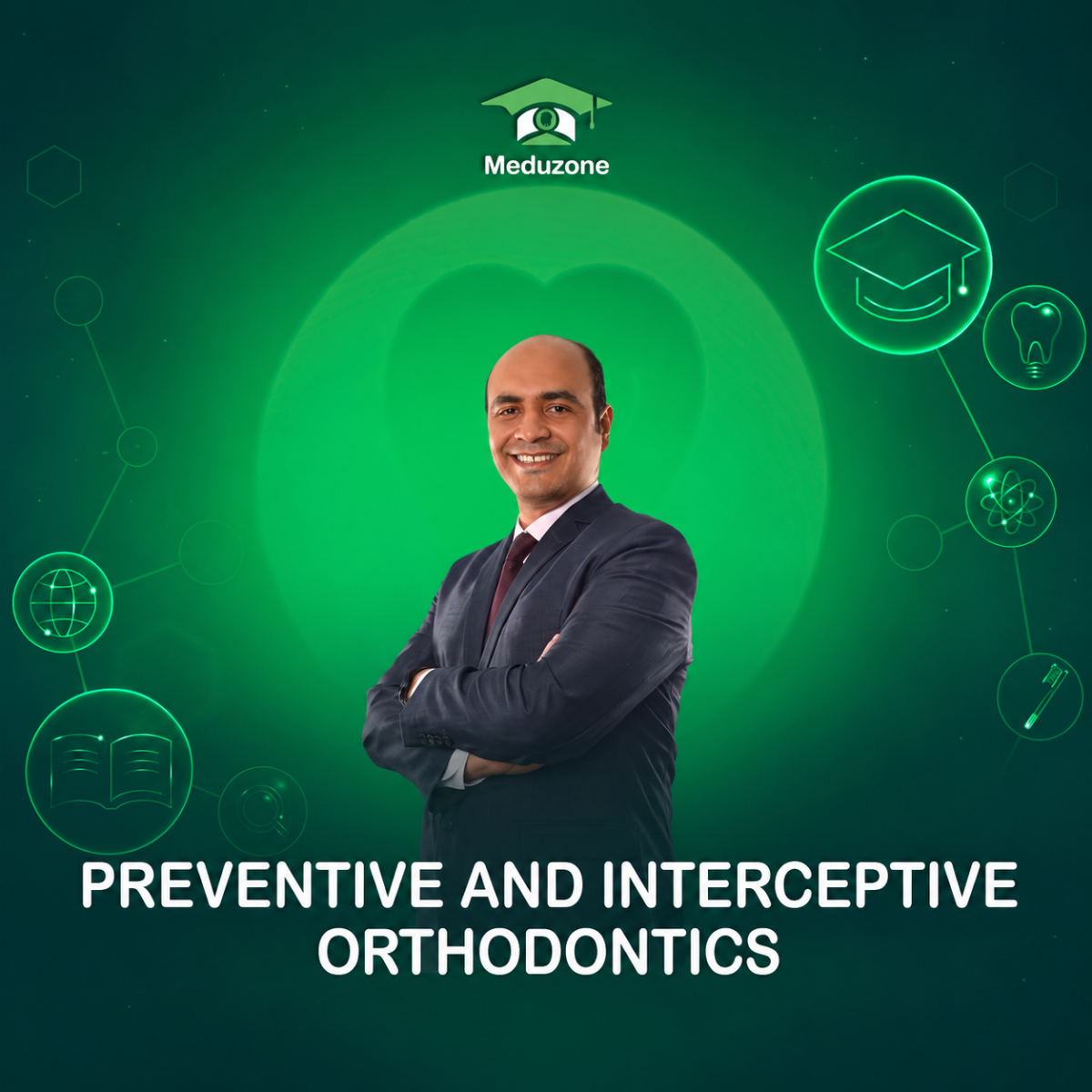
Preventive & Interceptive Orthodontics
Learn how to identify developing orthodontic problems during primary and mixed dentition, intervene at the right time, preserve space, manage eruption problems, control harmful habits, and reduce the severity of future malocclusion.
| Price: | 5000L.E. |
|---|
| session | Session Price |
|---|---|
|
|
5000L.E. |
| Add to cart |
share
Preventive & Interceptive Orthodontics
Sometimes the best orthodontic treatment is the treatment you prevent from becoming necessary.
Preventive & Interceptive Orthodontics is a practical course by Dr. Omar Yousry focused on recognizing and managing dental problems during growth — particularly throughout the primary and mixed dentition stages.
The course explains the difference between Preventive Orthodontics, where intervention helps prevent a malocclusion from developing, and Interceptive Orthodontics, where early treatment stops an existing developing problem from becoming more severe. 3- Preventive and Interceptive …
You will learn how to distinguish normal developmental findings and transient malocclusions from problems that genuinely require intervention.
The course covers space management, early loss of deciduous teeth, delayed shedding and eruption, space maintainers and space regainers, crowding, guided eruption, and serial extraction.
It then moves into eruption disturbances affecting incisors, canines, premolars, and molars, including delayed eruption, supernumerary teeth, potentially impacted canines, retained deciduous teeth, and ectopic eruption.
The final part focuses on functional problems and harmful habits, including thumb sucking, tongue thrust, mouth breathing, lip biting, traumatic deep bite, functional mandibular shifts, and anterior and posterior crossbites.
Preventive & Interceptive Orthodontics
- Understand the difference between preventive and interceptive orthodontics
- Recognize normal developmental changes versus true orthodontic problems
- Evaluate children systematically during mixed dentition
- Understand space problems and potential space loss
- Learn indications for space maintainers and space regainers
- Manage early loss and delayed shedding of deciduous teeth
- Understand mild, moderate, and severe crowding
- Learn the principles of guided eruption and serial extraction
- Recognize delayed eruption and eruption disturbances
- Evaluate potentially impacted canines
- Understand common problems affecting incisors, canines, premolars, and molars
- Manage harmful oral habits
- Understand early management of crossbites
- Recognize traumatic deep bite and functional mandibular shifts
- Know when referral or multidisciplinary intervention may be required
Preventive & Interceptive Orthodontics
By the end of this course, you will be able to:
- Differentiate preventive from interceptive orthodontic treatment
- Recognize transient malocclusion during growth
- Evaluate children during primary and mixed dentition
- Identify space problems and eruption disturbances
- Decide when space maintenance is required
- Understand when space regaining may be necessary
- Recognize generalized versus localized crowding
- Understand the indications and sequence of serial extraction
- Evaluate delayed eruption of permanent teeth
- Recognize common causes of unerupted central incisors
- Evaluate potentially impacted canines
- Assess retained or submerged deciduous teeth
- Identify destructive oral habits
- Manage thumb sucking and tongue thrust according to age
- Differentiate habitual from pathological mouth breathing
- Recognize crossbites that require early treatment
- Identify functional mandibular shifts
- Understand when early intervention can simplify future orthodontic treatment
Preventive & Interceptive Orthodontics
This course consists of 5 recorded online lectures focused on preventive and interceptive treatment during growth.
The course progresses through:
-
Interceptive Orthodontics I
Introduction to interceptive treatment, mixed dentition assessment, normal versus abnormal development, eruption monitoring, early loss of deciduous teeth, space maintenance, and delayed shedding. -
Interceptive Orthodontics II
Space problems, balancing extraction, generalized crowding, guided eruption, serial extraction, and space management. -
Interceptive Orthodontics III
Eruption problems affecting the incisors, including delayed eruption, impacted teeth, supernumerary teeth, diastema, and related eruption disturbances. -
Interceptive Orthodontics IV
Canine eruption problems, potentially impacted canines, and other eruption-related problems involving the developing dentition. -
Interceptive Orthodontics V
Functional problems, traumatic deep bite, thumb sucking, tongue thrust, mouth breathing, lip biting, mandibular shifts, and anterior and posterior crossbites.

Dr. Omar Yousry
Orthodontic Consultant - Academic Program Director at Perfect Braces Academy - MOrth RCSEd, MSc Cairo University
No customer reviews for the moment.