 English
 العربية
Comprehensive Orthodontic Diagnosis
Master a systematic approach to orthodontic diagnosis — from patient history and clinical examination to diagnostic records, lateral cephalometric analysis, problem list formulation, and case presentation.
| Price: | 5000L.E. |
|---|
| session | Session Price |
|---|---|
|
|
5000L.E. |
| Add to cart |
share
Comprehensive Orthodontic Diagnosis
A successful orthodontic treatment plan starts with a complete diagnosis.
Comprehensive Orthodontic Diagnosis is a structured course by Dr. Omar Yousry that takes you through the complete diagnostic process from the moment the patient enters the clinic until you build a clear Problem List and Case Summary.
The course begins with proper history taking, including the patient's chief concern, medical and dental history, family and social history, motivation, expectations, and psychological assessment.
You will then learn how to perform a comprehensive clinical examination that looks beyond the teeth and evaluates the patient as a whole — including general health, function, facial appearance, profile, smile, symmetry, proportions, soft tissues, alignment, and occlusion.
The course then moves into orthodontic diagnostic records, including photographs, casts, and radiographs, followed by a dedicated lecture on Lateral Cephalometry Analysis and Interpretation.
Finally, you will learn how to combine all available information into a structured Diagnostic Summary, Problem List, and Case Presentation before moving into treatment planning.
The aim is not simply to identify a malocclusion — but to understand where the problem originates, its component, severity, and etiology.
Comprehensive Orthodontic Diagnosis
- Follow a complete orthodontic diagnostic workflow from first consultation to final case summary
- Learn structured orthodontic history taking
- Understand the importance of the patient's chief concern, motivation, and expectations
- Perform comprehensive extra-oral and intra-oral examinations
- Evaluate health, function, and esthetics systematically
- Analyze facial symmetry, proportions, profile, lips, and smile
- Evaluate macro-, mini-, and micro-esthetics
- Assess intra-arch malalignment and inter-arch malocclusion
- Understand diagnostic photographs, casts, and radiographs
- Learn the role of lateral cephalometry in orthodontic diagnosis
- Differentiate skeletal and dental components of malocclusion
- Build a clear Problem List and Case Summary
- Organize findings into a professional orthodontic case presentation
Comprehensive Orthodontic Diagnosis
By the end of this course, you will be able to:
- Take a comprehensive orthodontic patient history
- Identify the patient's chief concern and treatment expectations
- Assess medical, dental, family, social, and psychological factors
- Perform systematic extra-oral and intra-oral examinations
- Evaluate facial symmetry and proportions
- Assess profile, lip competency, and smile characteristics
- Evaluate function including swallowing, mastication, speech, and respiration
- Identify intra-arch and inter-arch problems
- Analyze orthodontic photographs, casts, and radiographs
- Understand the principles and purpose of lateral cephalometric analysis
- Identify the component, etiology, and severity of orthodontic problems
- Formulate a structured Problem List and Case Summary
- Present an orthodontic case systematically before treatment planning
Comprehensive Orthodontic Diagnosis
This course consists of 5 recorded online lectures covering the complete orthodontic diagnostic workflow.
The course progresses through:
- History Taking — collecting the patient's personal, medical, dental, family, social, psychological, motivational, and chief-concern data.
- Clinical Examination — evaluating health, function, facial appearance, esthetics, alignment, and occlusion.
- Diagnostic Records — analyzing clinical photographs, study casts, and radiographic records.
- Lateral Cephalometry Analysis & Interpretation — understanding how to read and interpret the lateral cephalogram as part of orthodontic diagnosis.
- Diagnostic Summary & Case Presentation — combining all findings into a Problem List, Case Summary, and organized diagnostic presentation.
The course follows a step-by-step approach designed to help clinicians complete the diagnosis before making treatment decisions.
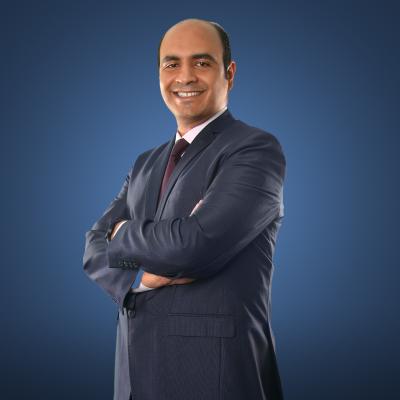
Dr. Omar Yousry
Orthodontic Consultant - Academic Program Director at Perfect Braces Academy - MOrth RCSEd, MSc Cairo University
No customer reviews for the moment.